파일:Globular Cluster M10.jpg




파일 설명
| 설명 |
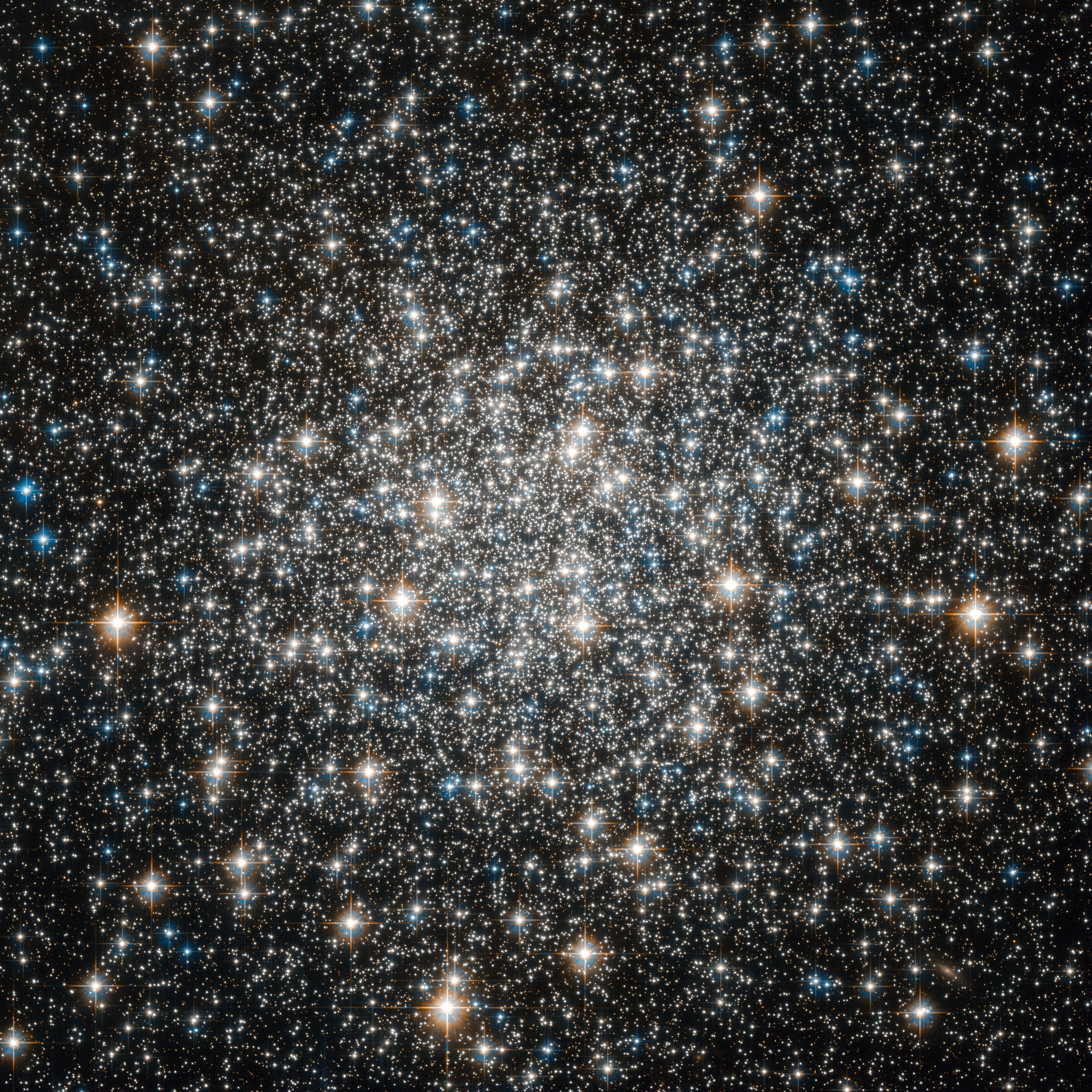
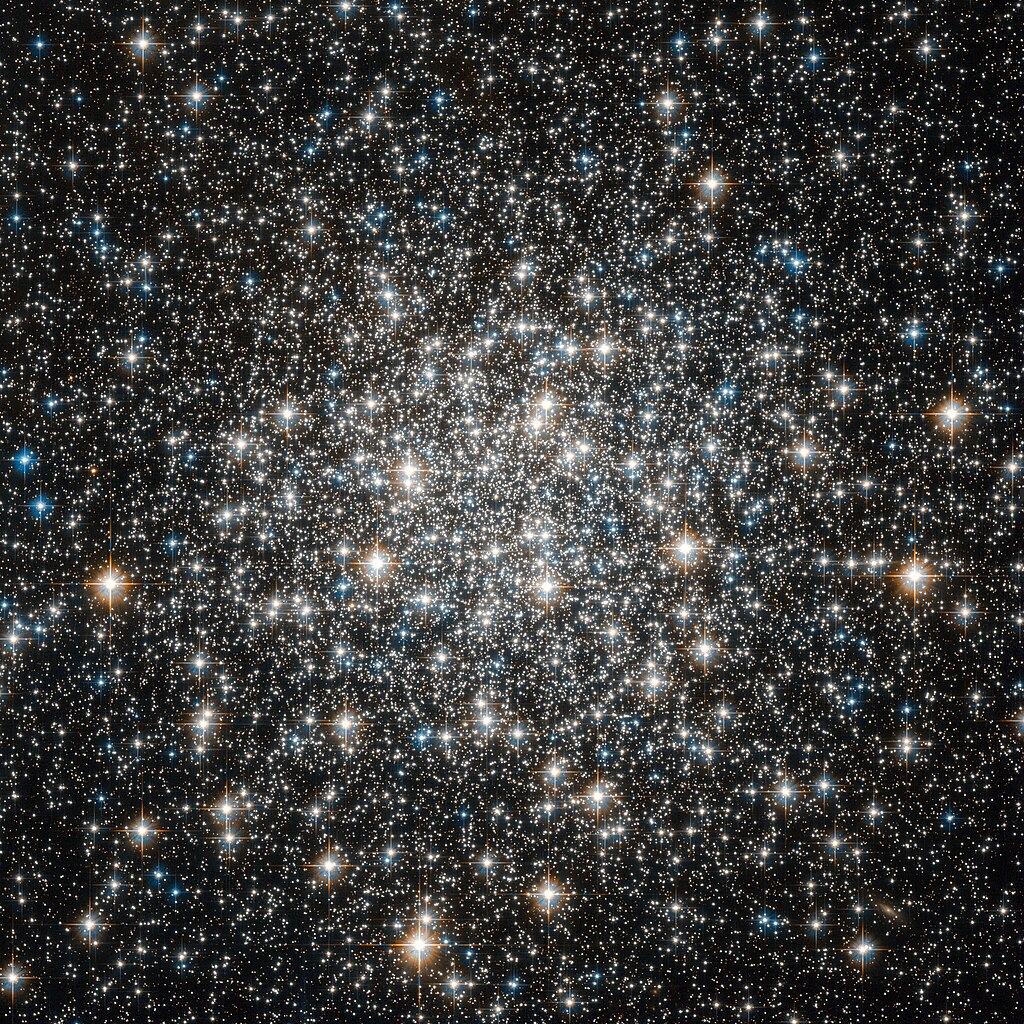
English: Like many of the most famous objects in the sky, globular cluster Messier 10 was of little interest to its discoverer: Charles Messier, the 18th century French astronomer, catalogued over 100 galaxies and clusters, but was primarily interested in comets. Through the telescopes available at the time, comets, nebulae, globular clusters and galaxies appeared just as faint, diffuse blobs and could easily be confused for one another.
Only by carefully observing their motion — or lack of it — were astronomers able to distinguish them: comets move slowly relative to the stars in the background, while other more distant astronomical objects do not move at all. Messier’s decision to catalogue all the objects that he could find and that were not comets, was a pragmatic solution which would have a huge impact on astronomy. His catalogue of just over 100 objects includes many of the most famous objects in the night sky. Messier 10, seen here in an image from the NASA/ESA Hubble Space Telescope, is one of them. Messier described it in the very first edition of his catalogue, which was published in 1774 and included the first 45 objects he identified. Messier 10 is a ball of stars that lies about 15 000 light-years from Earth, in the constellation of Ophiuchus (The Serpent Bearer). Approximately 80 light-years across, it should therefore appear about two thirds the size of the Moon in the night sky. However, its outer regions are extremely diffuse, and even the comparatively bright core is too dim to see with the naked eye. Hubble, which has no problems seeing faint objects, has observed the brightest part of the centre of the cluster in this image, a region which is about 13 light-years across. This image is made up of observations made in visible and infrared light using Hubble’s Advanced Camera for Surveys. The observations were carried out as part of a major Hubble survey of globular clusters in the Milky Way. A version of this image was entered into the Hubble’s Hidden Treasures Image Processing Competition by contestant flashenthunder. Hidden Treasures is an initiative to invite astronomy enthusiasts to search the Hubble archive for stunning images that have never been seen by the general public. The competition has now closed and the results will be published soon. |
| 날짜 | |
| 출처 | http://www.spacetelescope.org/images/potw1225a/ |
| 저자 | ESA/Hubble & NASA |
라이선스


- 이용자는 다음의 권리를 갖습니다:
- 공유 및 이용 – 저작물의 복제, 배포, 전시, 공연 및 공중송신
- 재창작 – 저작물의 개작, 수정, 2차적저작물 창작
- 다음과 같은 조건을 따라야 합니다:
- 저작자표시 – 적절한 저작자 표시를 제공하고, 라이선스에 대한 링크를 제공하고, 변경사항이 있는지를 표시해야 합니다. 당신은 합리적인 방식으로 표시할 수 있지만, 어떤 방식으로든 사용권 허가자가 당신 또는 당신의 사용을 지지하는 방식으로 표시할 수 없습니다.
파일 역사
날짜/시간 링크를 클릭하면 해당 시간의 파일을 볼 수 있습니다.
| 날짜/시간 | 섬네일 | 크기 | 사용자 | 설명 | |
|---|---|---|---|---|---|
| 현재 | 2012년 6월 18일 (월) 22:38 | | 4,059 × 4,059 (13.26 MB) | wikimediacommons>Fabian RRRR | original resolution |
이 파일을 사용하는 문서
다음 문서 1개가 이 파일을 사용하고 있습니다:
